Low Vision Specialists in Northern Tenerife
Struggling to see? There is still vision worth using
If an eye condition has reduced your sight, we assess how much you can still make use of and which aids can make everyday life easier.
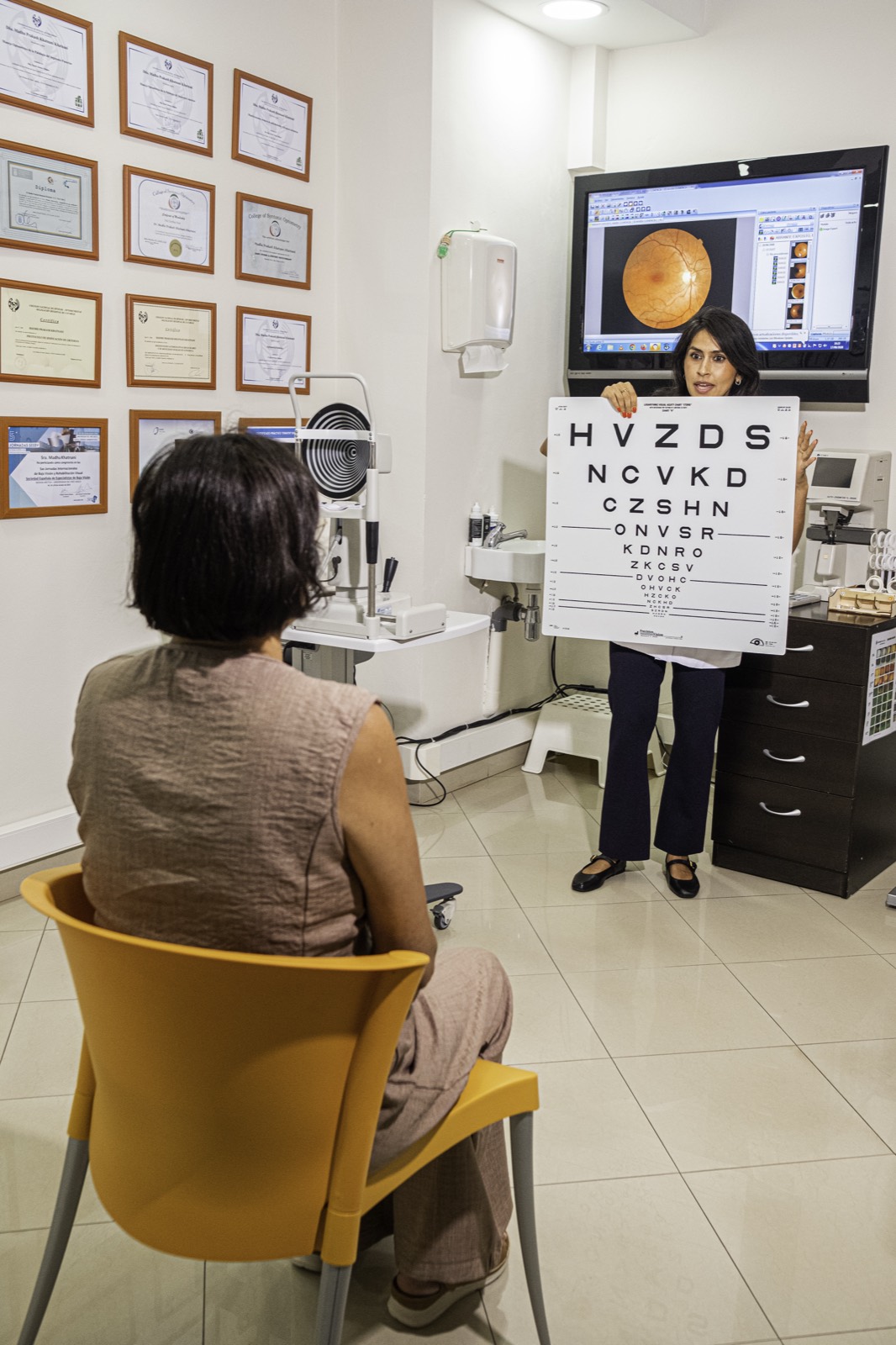
Does any of this sound familiar,
for you or for someone in your family?
Many people leave the doctor’s surgery with a diagnosis but with no idea what to do next. Does any of this ring a bell?
“I can’t read even with my usual glasses”
The letters blur, or you have to hold the page much too far away or much too close.
“I find it hard to recognise faces in the street”
Making out the features of family or friends takes an enormous effort.
“Light bothers me or dazzles me”
Going outside or walking into brightly lit places is uncomfortable or even painful.
“I feel I have lost my independence”
Using your phone, watching television or cooking has become a difficult task.
The fact that there is no cure does not mean that nothing can be done. If you still have some vision left, we can work with it, using the right aids, so that you do not have to give up the things you enjoy.
It is not just the aid itself,
it is learning to look through it
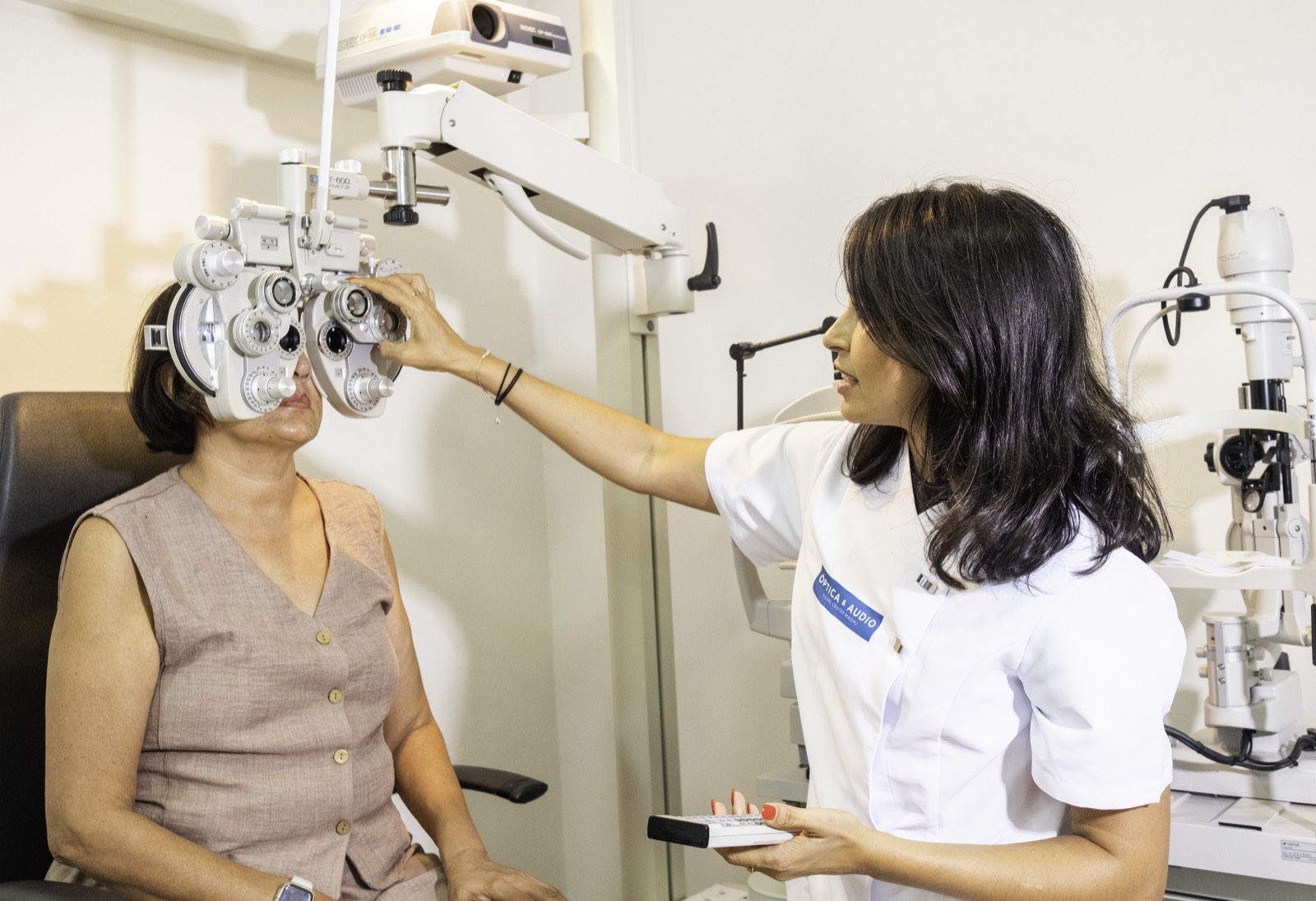
In optometry, low vision is the speciality focused on people with severe sight loss caused by conditions such as macular degeneration (AMD), glaucoma, diabetic retinopathy or retinitis pigmentosa, among others.
There is a very wide range of advanced optical aids that go well beyond ordinary glasses. At Visual Center Madhu we do not just find the one that suits you: we also teach you how to use it and stay with you while you get used to it.
What does our Low Vision Assessment (an hour and a half) include?
Stage 1: Diagnosis and assessment of your remaining vision
One-to-one interview
We get to know in detail what you really need and which tasks have become impossible in your day-to-day life.
Assessment of remaining vision
We measure precisely how much useful vision you still have, both for distance and for near.
Visual acuity and field measurement
We assess your visual field, your contrast sensitivity and how much you are affected by glare.
Specific reading tests
We look at your reading speed, comfort and comprehension.
Stage 2: Choosing solutions and training
Trial of optical aids
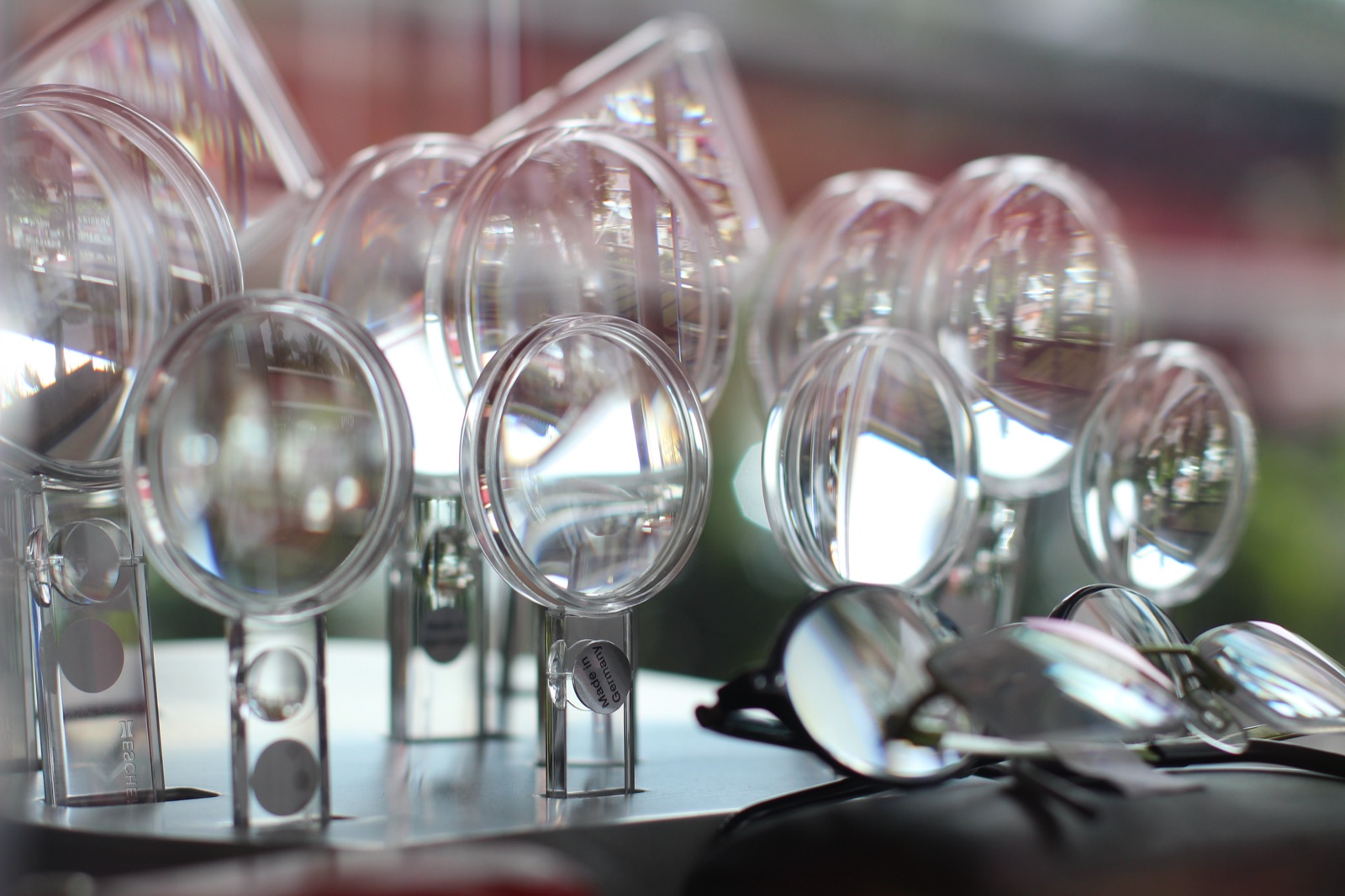
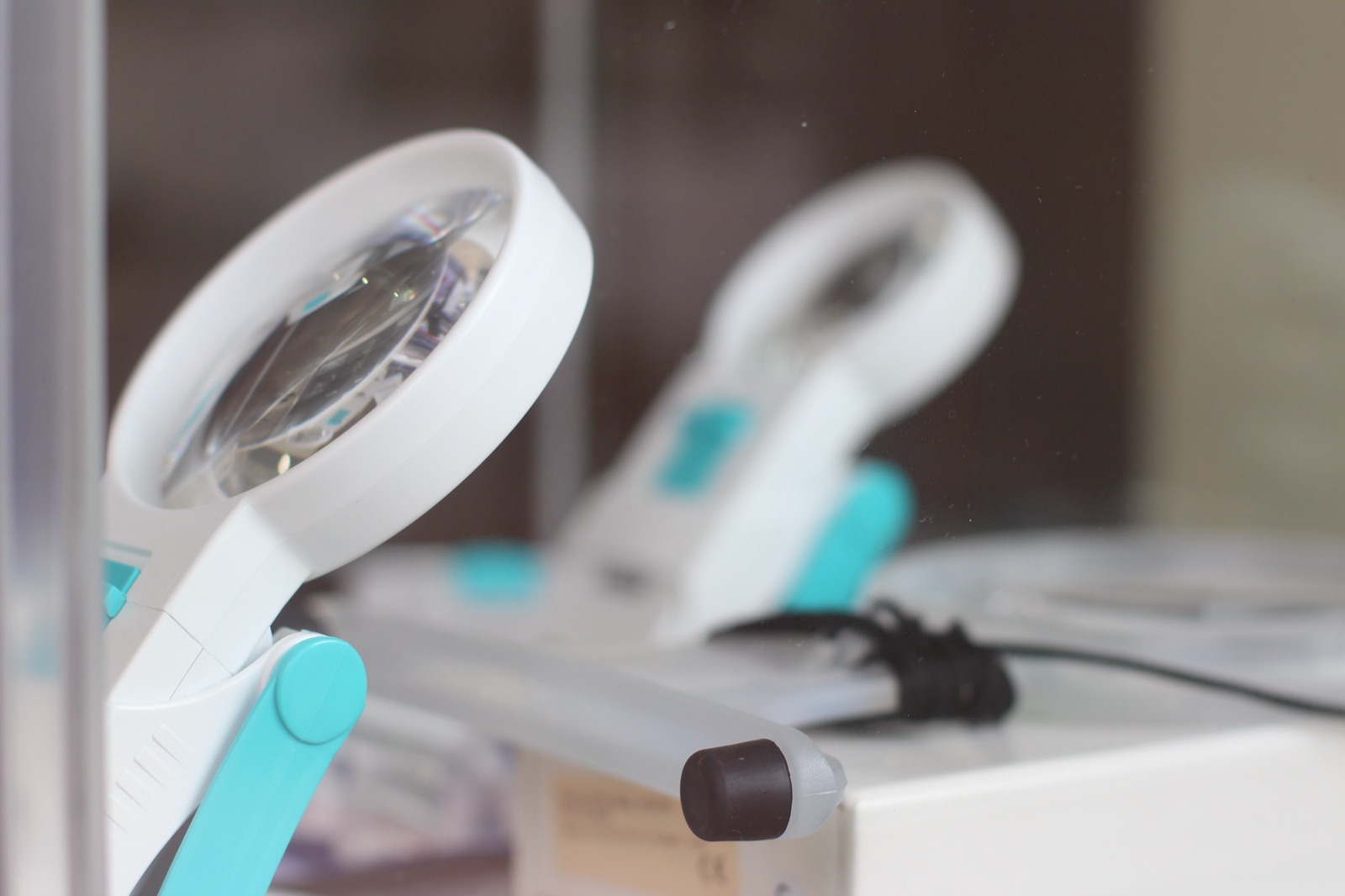
We assess how you get on with high-precision magnifiers, telescopes, microscopes and selective absorption filters.
Demonstration of electronic aids
We try out digital devices for reading, writing, using your phone or watching television.
Advice based on your lifestyle
We choose the solution that best suits your eye condition and your daily routine.
Training in how to use the aids
We show you step by step how to use each device so that you really get the most out of it at home.
Visual rehabilitation plan
We design a programme aimed at helping you regain your independence and quality of life.
Optical aids
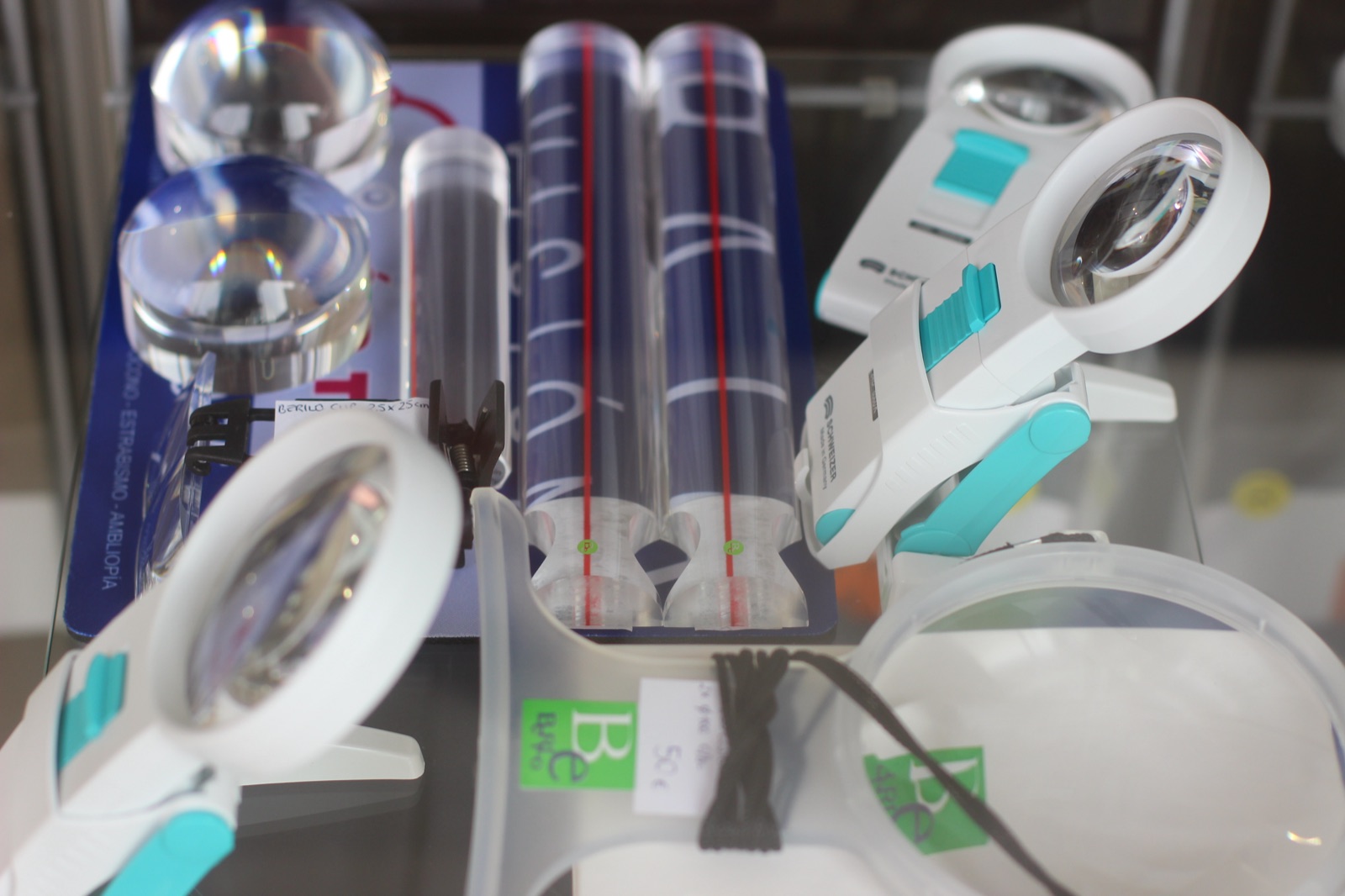
Magnifiers, telescopes and filters
There is no single aid that works for everyone
Learn with Madhu
We explain some success stories in plain language
Frequently asked questions
Do you sell magnifiers for low vision?
The traditional magnifying glass is very limited compared with what optometry can do today. We now have far more precise and comfortable optical and electronic aids, such as microscopes, telescopic systems, selective absorption filters and prisms. In our personalised assessment we look at your remaining vision so that we can recommend exactly the solution you need in your day-to-day life, going well beyond a conventional magnifier.
Is it true that there is nothing to be done after a diagnosis of macular degeneration (AMD)?
Medically or surgically, many retinal conditions cannot be cured, which is why the hospital often has no further treatment to offer. In low vision, however, the approach is different: as our own patients always tell us, “when you can barely see, a 10% or 20% improvement changes your life”. It may look like a small gain from the outside, but for that person it means signing a document again, seeing their grandchild’s face or eating independently.
There is still vision to make the most of.
Take the first step.
Book your initial assessment at our centre in Puerto de la Cruz.